The Real Cost of Manual Repositioning
Celebrating Good Care Month by Addressing Workforce Strain and Manual Handling Safety
July marks the UK’s Good Care Month, a dedicated campaign celebrating the social care workforce and promoting best practices across residential and domiciliary settings and, while clinical discussions around care quality rightfully centre on patient comfort and safety, true operational excellence cannot exist without also protecting the individuals delivering that care.
For facility managers and clinical leads, managing pressure ulcer prevention protocols represents one of the most physically demanding aspects of daily operations; and one of the highest risks for staff injury.
The Invisible Toll of Manual Handling
Repositioning a dependent patient in bed is not simply a matter of routine; it is a high-risk manual handling maneuver and despite rigorous training and hoist usage, the repetitive nature of rolling, pulling, and stabilising patients can take a severe cumulative toll on your workforce in the following ways:
Musculoskeletal Disorders (MSDs): Back pain, shoulder strains, and repetitive strain injuries remain the leading causes of sickness absence among UK care staff.
Burnout and Attrition: The physical exhaustion of manual turning schedules accelerates staff burnout, directly feeding into the sector’s ongoing recruitment and retention challenges.
Compromised Patient Safety: When staff are fatigued or short-handed, the physical difficulty of turning highly dependent residents can create subtle friction and shear risks, compromising the quality of the maneuver itself.
Redefining Good Care Through Ergonomic Automation
To build a sustainable care environment, providers must adopt technologies that serve to alleviate the physical burden of manual handling on staff whilst simultaneously elevating clinical standards for the resident.
Solutions include:
Removing the Heavy Lifting with KomfiTilt: The KomfiTilt lateral tilt system acts as an engineering safeguard for the workforce. By automating a gentle 22° lateral turn on a programmed cycle, it drastically reduces the frequency of strenuous manual handling tasks.
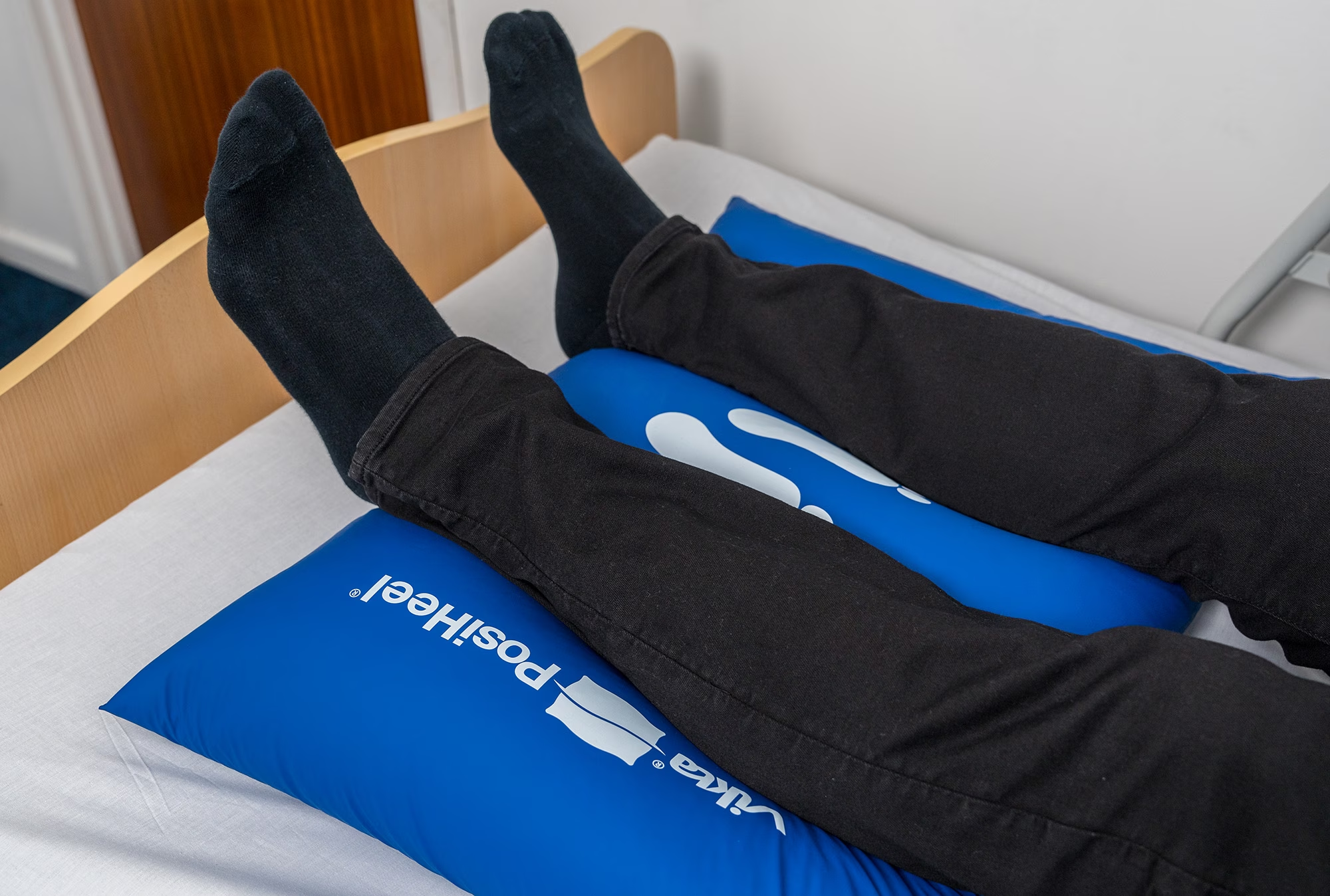
Intuitive micro-adjustments with PosiPerle: Manual positioning often requires carers to repeatedly lift, wedge, and adjust heavy foam blocks or standard pillows to maintain a patient’s posture. The PosiPerle microbead range lightens this load; the lightweight, fluid polystyrene beads easily mold to the resident’s shape with minimal physical effort from the carer, making it simple to achieve stable, precise offloading without repetitive strain.
Preserving Care Capacity: When the heavy physical work of turning is handled mechanically, care teams are freed from the constant strain of manual rolling. This protects staff longevity, reduces injury-related absence, and allows carers to dedicate their time to more complex, rewarding elements of patient care – the very definition of Good Care.
Protect Your Team and Enhance Your Care Standards
This Good Care Month, look after the workforce that looks after your residents.
Get in touch with our specialist team today to see how integrating the KomfiTilt or PosiPerle positioning pillows into your care plans can eliminate strenuous manual turning, lower injury rates, and protect your frontline team.